Vol. 3 No. 4 (2026): Trust and Safety Research Conference Proceedings 2026

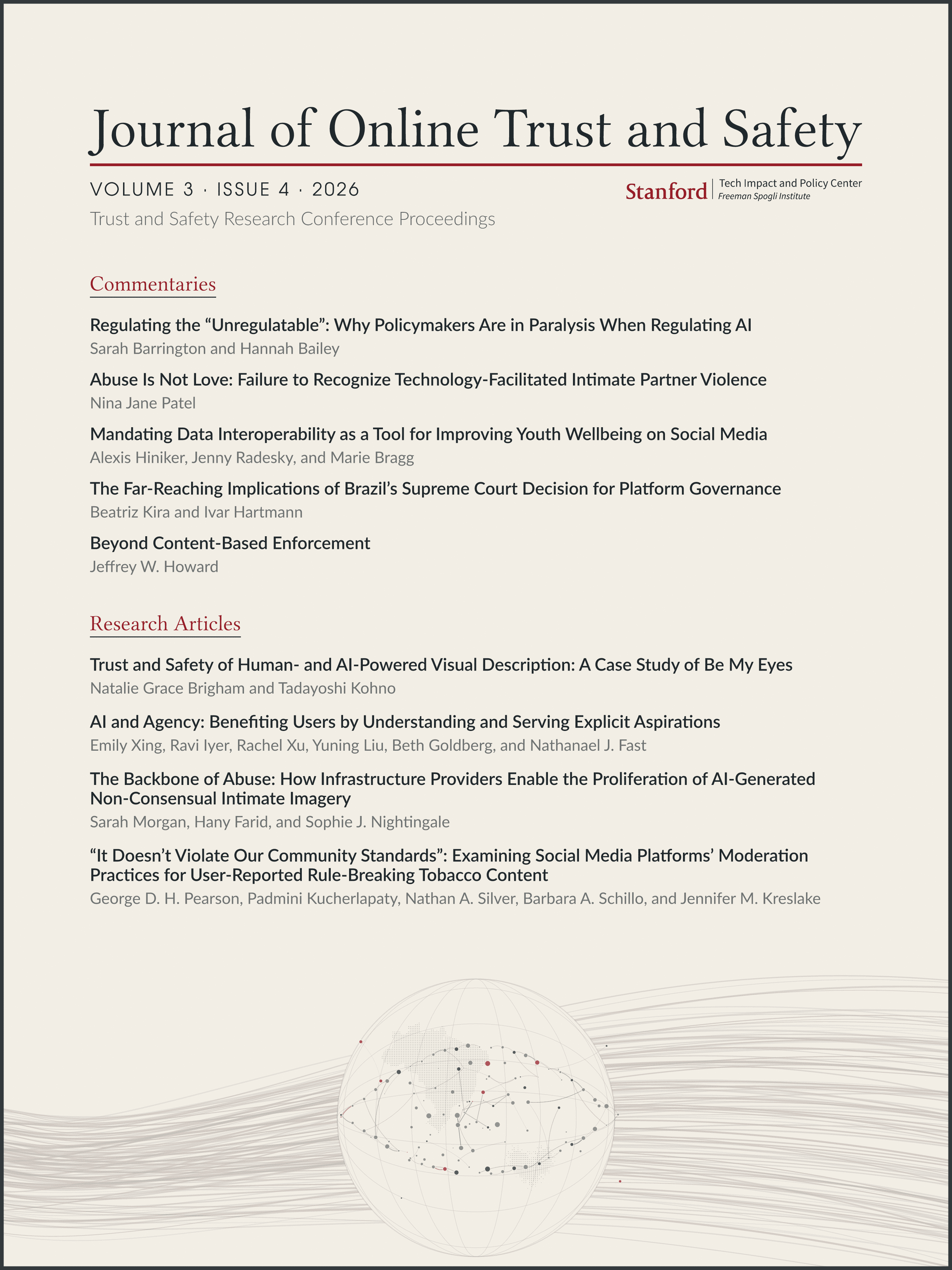
This issue brings together five commentaries and four research articles. The commentaries argue that generative AI is less ungovernable than policymakers assume, examine why young people often fail to recognize partner surveillance as abuse, propose data interoperability as a tool for youth wellbeing, unpack the Brazilian Supreme Court ruling that rewrote platform liability, and set ethical limits on enforcement that targets what users do rather than what they post. The research articles catalog the harassment, privacy, and accessibility problems that blind and low-vision users and their sighted volunteers report in app-store reviews of the visual description app Be My Eyes, ask how AI can serve people’s long-term goals rather than their momentary impulses, trace the web hosts, delivery networks, and search engines that keep sites of AI-generated non-consensual intimate imagery online and easy to find, and test whether the three platforms most popular with youth act on user reports of tobacco content that breaks their own rules.
The Journal of Online Trust and Safety is grateful to the Omidyar Network for their generous support.